Mining Engineering Expert Allowed to Opine on Safety Duties
Posted on November 23, 2026 by Shuva Guha Thakurta
About three years ago, Mickey and Sheila Blackburn (collectively, “Plaintiffs”) filed the instant suit against 3M Company (“3M”) and others.
Mickey Blackburn was employed as an underground coal miner in Pike County, Kentucky, from approximately 1988 to 2002. During that time, Blackburn used respiratory protection equipment manufactured by 3M. Specifically, Blackburn used 3M 8710 and 3M 8210 respirators—disposable N95 half-facepiece respirators certified by the National Institute for Occupational Safety and Health (“NIOSH”). Decades after his employment ended, Blackburn was diagnosed with coal workers’ pneumoconiosis/black lung disease (“CWP”), a progressive and irreversible lung disease often caused by exposure to coal mine dust and/or crystalline silica. Plaintiffs asserted that Blackburn’s illness resulted from dust exposure and his use of 3M’s respirators, alleged to be “defective, unsafe, and unreasonably dangerous.”
3M sought to exclude opinions and testimony of four of Plaintiffs’ expert witnesses, Dr. Drew Harris, John Michael Price, Dennis Jack Spadaro, and James Brandon Crum, while Plaintiffs sought to exclude the opinions and testimony of two of 3M’s expert witnesses, John Weiss and Dr. Scott Dotson.
Pulmonary Disease and Critical Care Expert Witness
Drew A. Harris is a board-certified pulmonary and critical care physician. According to his expert report, Harris served as the medical director of one of the largest black lung clinics in the country, with his primary expertise in the diagnosis and management of patients with lung diseases related to coal mine dust.
Industrial Hygiene Expert Witnesses
John Michael Price, Ph.D. is a certified industrial hygienist and safety professional who lectures at Northeastern University and the Harvard T.H. Chan School of Public Health.
He is also a member of the ASTM International Committee E34 on Occupational Health and Safety and holds an array of advanced degrees in chemical engineering, environmental science, and law and public policy.
Scott Dotson, Ph.D. is an industrial hygienist “with over 20 years of experience in the fields of industrial hygiene, occupational health, toxicology, and human health risk assessment.”
Mine Safety Expert Witness
Dennis Jack Spadaro is the former director of the National Mine Health and Safety Academy at MSHA. He has worked extensively in mine safety inspection and regulation at both the state and federal levels.
Radiology Expert Witness
James Brandon Crum, D.O. is a radiologist who worked at Lincoln Memorial University, the Kentucky College of Osteopathic Medicine, and the United Medical Group. He is NIOSH certified for his demonstrated proficiency in classifying radiographs.
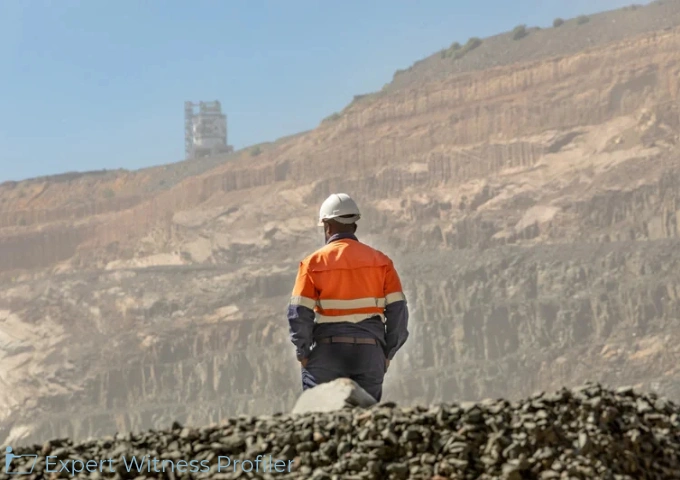
Mining Engineering Expert Witness
John L. Weiss is a vice president of John T. Boyd Company, a privately owned mining and geological consulting firm. He is a registered professional engineer and has prior experience working as an underground mine foreman.
Weiss has a Bachelor of Science in Mining Engineering, and completed two additional years of graduate work towards a Master of Engineering Degree in Mineral Engineering Management.
Discussion by the Court
1. Drew Harris, M.D.
After reviewing Blackburn’s extensive medical records and speaking with him on the phone, Harris concluded that there is clear evidence Blackburn suffers from lung disease related to coal mine dust exposure. In a supplemental report, Harris also determined that it is “more likely than not that Blackburn’s lung disease will progress to the point of needing a lung transplant within the next [five] years (conditional on Blackburn quitting tobacco and stopping narcotics).”
3M sought to exclude Harris’ opinion that Blackburn will require a lung transplant in the next five years, along with any opinions about respiratory protection products and causation.
In response, Plaintiffs noted that they “are not presenting Harris to testify about respiratory protection, and therefore, they . . . agree that Harris will not offer any testimony on issues involving respiratory protection.”
Given the parties’ agreement and the Court’s independent review, the motion is granted to the extent that 3M seeks to exclude Harris’ opinions on respiratory protection products and causation relative to such products. With that being said, Harris’ conclusion regarding Blackburn’s probable need for a lung transplant poses a more difficult question.
3M highlighted that Harris is not Blackburn’s treating physician, that he has never personally examined Blackburn, and that his prognosis differs from the one given to Blackburn during a separate medical assessment at the Cleveland Clinic—where Blackburn was informed that he was “too well” for a lung transplant. While 3M’s criticisms are mostly accurate, they do not warrant exclusion.
Although Harris’ supplemental opinion is concise, it is still based on sufficient facts or data, still the product of reliable principles and methods, and still reflects a reliable application of those principles and methods.
In his opinion, Harris acknowledged that speculating as to whether a patient will require a lung transplant “is not [a] straightforward” task. He does, however, note that the “presence of a progressive phenotype” of pulmonary fibrosis provides strong evidence that a lung transplant will be required at some point in the near future.
In reaching that conclusion, Harris cited published academic literature indicating that a patient with a progressive phenotype of a fibrotic interstitial lung disease (a category that includes pulmonary fibrosis) has a relatively similar transplant-free survival time to a patient with idiopathic pulmonary fibrosis, the latter of which generally requires a lung transplant within five years. Mortality figures Harris rationally compares offer validation on the time frame given.
He then went on to accurately define the criteria for identifying a progressive phenotype of pulmonary fibrosis, noting that a patient must demonstrate at least two of “worsening lung function,” “worsening radiographic disease,” and “worsening symptoms.” Evidently—and this is based directly on Harris’ interview—Blackburn’s symptoms have worsened and are limiting his ability to complete daily life activities. Moreover, an examination of Blackburn’s radiographic progression reveals a rapidly expanding right upper lobe mass consistent with CWP. These results, per the academic literature, suggest a reasonable probability that a lung transplant will be necessary, thus supporting Harris’ ultimate conclusion. A pulmonologist with Harris’ credentials can make this call before a jury.
And though 3M implied that Harris’ conclusion contradicts that reached by the physicians at the Cleveland Clinic, it does not—at least, not to the extent suggested. Those doctors merely determined that Blackburn’s lungs were too healthy for a transplant at the present moment. Harris himself agrees with that finding. He only contended that Blackburn is more likely than not to require a transplant within the next five years based in large part on the aforementioned radiological imaging. And in part, Harris noted that the Cleveland Clinic may not have fully accounted for the degree and pace of progression. Although Harris’ conclusion is far from certain, it need not be—the lack of a definitive prognosis does not transform his opinion into the baseless speculation 3M contends. To the extent that Harris’ conclusion is uncertain, 3M has the right to test it through the established mechanics of trial. Accordingly, the Court denied exclusion with respect to Harris’ opinion about Blackburn’s future need for a lung transplant.
2. John Michael Price, Ph.D.
In a written opinion, Price contends, inter alia, that the 3M 8710 and 3M 8210 respirators have various design defects, that there is a reasonably safer alternative design for those respirators, and that Blackburn’s use of the respirators was a substantial contributing factor in his development of CWP.
In an extensive motion, 3M raised four arguments for exclusion, asserting that Price has no reliable basis: (1) to opine that the “use of a dual cartridge elastomeric respirator with high efficiency filters” is a reasonably safer design for the 3M 8710 and 3M 8210 respirators; (2) to define the standards of care that respirator manufacturers should follow in testing or making facepiece particulate respirators; (3) to speculate as to the reliability of 3M’s internal product testing; or (4) to suggest that the defects in the respirators were a substantial contributing factor in causing Blackburn to contract lung disease. Plaintiffs opposed all four of 3M’s bases for exclusion.
i. Reasonably Safer Alternative Design
Briefly, Price argued that a “dual cartridge elastomeric respirator with high efficiency filters” functions as a reasonably safer alternative design for the allegedly defective 3M 8710 and 3M 8210 respirators.
3M takes issue with that assertion, emphasizing that Price never “designed, tested, or researched whether this proposed alternative would preserve the advantages” of the 3M respirators at issue, which are “lightweight, comfortable, easy to fit, and inexpensive.”
3M further claimed that Price has failed to identify a reasonably safer alternative design at all. Rather, he has instead described an entirely different product.
As a preliminary matter, the Court noted that some of 3M’s arguments are misplaced. To be sure, whether a dual cartridge elastomeric respirator is a reasonably safer alternative design for the respirators at issue, as a matter of law, is certainly relevant to 3M’s motion for summary judgment. But the topic has limited bearing on whether Price’s opinion meets the standards set out in Rule 702 and Daubert. For the purpose of deciding this motion, the Court’s only task is to determine whether those threshold requirements are satisfied.
3M is correct in claiming that Price has never “designed, tested, or researched” his proposed alternative respirator. But none of those steps are absolute prerequisites for admissibility. And while conclusions based on personal experience are not enough to prove a theory that lends itself to testing and substantiation, Price actively and rationally relies on 3M’s internal testing or records and the Mine Safety and Health Administration’s (“MSHA”) regulations, among others, in reaching his ultimate finding.
With respect to 3M’s internal product testing data, Price highlights the company’s conclusion that maintenance-free respirators, like the 3M 8710 and the 3M 8210, “cannot be fit checked with the same rigor and precision as elastomeric respirators.” Indeed, 3M’s testing reveals that a standard fit check—which assesses the degree of leakage between a user’s face and a respirator’s seal—conducted on maintenance-free respirators results in a comparatively high false positive error rate, thus creating the potential for an overstated fit factor. Price also references internal engineering documents that discuss the relationship between a respirator’s pressure drop, or the resistance to airflow created by the respirator’s filter during inhalation, and face seal leakage. Specifically, Price cited materials indicating that increased pressure drop results in greater face seal leakage when the respirator does not maintain a stable seal. He then goes on to explain that this relationship is particularly significant because breathing resistance naturally increases as a respirator is used, partially on account of escalating humidity and condensation. In turn, this increased resistance can cause the fit and overall protection of a facepiece respirator to degrade more aggressively over time. By contrast, Price opined that an elastomeric respirator better secures its filter to the wearer’s face and maintains a tighter, more durable seal.
And with regard to MSHA’s regulations, Price relied on the agency’s 2024 crystalline silica rule, which explained that “95 and 99 series particulate respirators do not offer [coal miners] as high a degree of protection as the 100 series . . . and are less likely to provide the expected level of protection due to . . . poor fit and vulnerability to mishandling such as folding or crushing.”
According to Price, these limitations would apply to the 3M 8710 and the 3M 8210, each of which is an N95 filtering facepiece respirator (“FFR”). By contrast, reusable elastomeric respirators can be fitted with 100 series filters that provide a higher level of protection. He also takes care to note MSHA’s finding that “the structural integrity” of FFRs “is very easily compromised in harsh mining environments” given the characteristic “paper-like shell” of that class of respirators. In Price’s view, this concern is mitigated with elastomeric respirators, which make use of a more durable facepiece that straps to the wearer’s face.
Of course, the Court is cognizant that operation of MSHA’s 2024 crystalline silica rule is presently stayed. But that fact does not render the rule or MSHA’s commentary irrelevant. Importantly, Price is not merely relying on a proposed regulation. Rather, he is relying on a formally promulgated administrative rule adopted through notice-and-comment rulemaking, ultimately reflecting MSHA’s determination that stricter respiratory protection requirements are warranted under certain exposure conditions. That conclusion is consistent with evidence that 3M itself has evidently generated regarding the limitations of FFRs in high exposure mines. Moreover, the stay request was principally driven by implementation and compliance concerns associated with the rule’s lower permissible exposure limits, not by any contention that MSHA’s factual findings or scientific conclusions were unsound. As a result, the Court credits Price’s reliance on the rule in drafting his report.
Price did not conduct his own testing. But he did apply a discernible and accepted methodology to reach his conclusion, synthesizing existing test results (often 3M’s own tests) and governing regulations to conclude that the 3M 8710 and 3M 8210 respirators are inferior to elastomeric respirators fitted with high-efficiency filters along dimensions of efficiency, fit, and durability. To the extent that 3M feels otherwise, the Court again emphasizes that it is free to make any shortcomings in Price’s report apparent before the jury at trial. At this stage, however, Price’s application of reliable principles and methods to the facts of this case is sufficient.
ii. Standard of Care
Several times, Price opined that 3M violated an applicable standard of care. 3M challenged those opinions, stating that “Price cannot point to any manufacturer who met his proposed standard of care requiring filter testing, fit testing, and high humidity testing on disposable respirators because he has never reviewed quality control documents from any other manufacturers.”
In response, Plaintiffs asserted that Price need not define a specific standard of care, as he has sufficiently established, e.g., that 3M violated 30 C.F.R. § 11.140-5, and violation of a federal regulation constitutes negligence per se.
However, Rule 702 does not require an expert to ignore an industry-specific federal regulation just because it lacks the litigation effect of a comparable state regulation. The Court proceeds accordingly.
Plaintiffs’ argument is particularly convincing in two respects. First, Price should not—and indeed, cannot—be required to canvass every manufacturer’s confidential records to identify the applicable standard of care. Rather, Price should be permitted to rely on a range of resources, including the American National Standards Institute’s recommendations, the American Industrial Hygiene Association’s manuals, the National Society of Professional Engineers’ ethical rules, internal 3M documents showing concerns about respirator effectiveness, and his knowledge and belief that prudent manufacturers often exceed or should exceed minimum regulatory requirements.
Second, Price’s standard of care opinions may certainly be admitted to the extent they are premised on 3M’s violation of § 11.140-5. Price expressly claimed that the 3M 8710 failed to satisfy § 11.140-5 while that regulation was in effect. Specifically, he asserts that 3M “was obligated to remove the mask from the market when it determined the mask was incapable of passing the NIOSH breathing machine test,” which limits the degree of allowable breathing resistance under that regulation. Here, Price identified a specific regulation that governed the certification of the respirator at issue; he then claims, based on 3M’s internal testing data, that the respirator failed to meet the regulation’s prescribed pressure drop limit while it was being sold. If accepted, that conclusion will provide the jury with an objective and accepted benchmark for evaluating 3M’s conduct and the product’s attributes. Because of that fact, and because Rule 702’s requirements are otherwise satisfied, exclusion is unwarranted.
The 3M 8210 respirator, however, was not approved under § 11.140-5, nor did it need to be. Price acknowledged as such in his report, noting that “42 C.F.R. part 84 dropped” the breathing test requirement, “leaving this class of mask untested for that feature after 1998.” That said, Price draws founded parallels between the 3M 8710 and the 3M 8210, arguing that the former’s vulnerabilities—as revealed in the testing—were likely transferred to the latter. Thus, per Price, some of the same flaws that beset the 3M 8710 respirator continue to attach to the 3M 8210 respirator, and 3M should have tested and accounted for the continuing role of humidity on performance. The Court found that sentiment well-grounded under the applicable liminal framework. Price does not simply offer ipse dixit about 3M’s testing. Rather, he relied on documented evidence of the 3M 8710 respirator’s poor testing performance, along with 3M’s alleged knowledge of that performance, to draw a reasonable inference about the 3M 8210 respirator. That is, evidence that the 3M 8210 respirator was sold and marketed in the absence of prudent testing and without accounting for the effects of humidity on the respirator buttresses Price’s standard of care opinions.
Ultimately, the jury will be assessing duty of care under reasonableness standards. Price’s points regarding alleged known flaws in the 3M 8710 and likely persisting issues in the 3M 8210 will help the jury assess 3M’s own conduct (or the conduct of an ordinarily prudent company, as applicable) under the theories presented.
iii. Pressure Drop and Internal Product Testing Data
In portions of his report, Price asserted that the increased humidity and pressure drop associated with extended use of an N95 FFR results in additional breathing resistance and structural damage that worsens face seal leakage.
He further claimed that 3M’s internal product testing data reveals significantly worse respirator performance data than the published literature, with wearers achieving satisfactory fit factors (defined as a fit factor of 100) less than half of the time.
3M contended that Price should not be permitted to opine on either subject, as he only parrots research generated by Dr. Jim Johnson, an industrial hygienist previously retained by Plaintiffs as an expert witness, and Dr. Chris Coffey, a former NIOSH employee but onetime retained Plaintiffs’ expert who published studies on the effectiveness of the 3M 8210 respirator and has since come to question his results in light of 3M’s internal product testing data.
More specifically, 3M argued that Price does little more than borrow from Johnson and Coffey’s opinions, and as a result, acts as a mere “conduit for hearsay.” Of course, 3M is correct that “parrot[ing] another individual’s out-of-court statement, rather than conveying an independent judgment that only incidentally discloses the statement to assist the jury in evaluating the expert’s opinion,” is akin to hearsay.
But that principle is cabined by the more general rule that “an expert may base an opinion on facts or data in the case that the expert has been made aware of,” and that such facts or data “need not be admissible for the opinion to be admitted.”
At this juncture, the pertinent inquiry is only whether Price “has consulted numerous sources, and used that information, together with his own professional knowledge and experience, to arrive at his opinion.” Price has done so, and as a result, the Court concluded that his opinions are not a conduit for inadmissible hearsay under the lenient Rule 703 standard.
To support his humidity opinion, Price cited outside literature that discusses respirator performance in coal mines, technical materials that address filter efficiency and pressure drop, his own analyses and experiences as an industrial hygienist, and corroborative testing. And while those sources do not always discuss humidity explicitly, they did provide the technical foundation and support for Price’s conclusion that moisture accumulation during extended use may increase breathing resistance and, in turn, worsen face seal leakage.
The same is true of Price’s opinions concerning 3M’s internal product testing data. In his report, Price reviewed 3M’s fit test data and engineering materials, including the company’s historical memoranda concerning the performance of the 3M 8710 respirator in coal mines. He then compared those internal results to the published literature, applying his own professional judgment to conclude, e.g., that 3M’s internal findings suggest a worse fit factor than outside studies do. He is not, despite what 3M contends, merely parroting Johnson or Coffey.
To the extent 3M seeks exclusion on this basis, its motion is denied. With that being said, the Court sets an obvious and warranted caveat—Price may not, on direct, quote from or reference either Coffey or Johnson’s work product in his testimony. The Court will depend on Price’s individualized analysis.
iv. Exposure and Causation
At the conclusion of his report, Price stated that the purported defects in the 3M 8710 and 3M 8210 respirators were significant causes of Blackburn’s illness.
Price does not, however, attempt to calculate Blackburn’s lifetime exposure to coal and silica dust. Rather, he cites published epidemiological studies, NIOSH standards, and MSHA data to ultimately conclude that coal miners like Blackburn are routinely exposed to respirable coal and silica dust at levels that can cause CWP.
From there, Price inferred that Blackburn’s use of the 3M 8710 and 3M 8210 respirators, on account of their alleged inability to provide sufficient protection from coal and silica dust, was a substantial contributing factor in causing his condition.
3M argued that Price cannot draw that conclusion because he relies on only limited evidence (really, just Blackburn’s deposition testimony) that Blackburn used 3M respirators, and relatedly, lacks any particularized knowledge about the quality of fit that Blackburn was able to achieve while allegedly using those respirators.
In the Court's view, Price’s opinions are sufficiently grounded. Indeed, he cites objective proof of a data fund of comparable, likely exposure in underground coal mines. Based on his opinions regarding the low efficacy of the 3M respirators, he then infers a link between exposure and disease development. Blackburn’s own proof, though disputed, is his claimed use of 3M masks for the full duration of his underground mining career. Although cause is a highly contested issue for the jury, the Court sees no reason to preclude Price’s analysis under Rule 702.
Certainly, 3M will have its points and queries about Blackburn’s individualized mask fit. But Price may still testify regarding what the data show about the fit adequacy and consistency of 3M’s respirators and the difficulties associated with assuring and testing for fit. Perhaps Blackburn did achieve and maintain a proper fit throughout each shift. But perhaps he did not. Either way, Price has identified a sufficient basis for questioning that premise given his data-based opinions—not only on fit itself, but also on the duration of effective protection in light of the 3M respirators’ alleged structural difficulties in the arduous mining environs.
Simply put, experts are not required to “produce a mathematically precise [opinion] equating levels of exposure with levels of harm.” Rather, experts may extrapolate from existing research and data to conclude that workers in particular environments face a specific type and degree of hazard. Price’s reliance on published literature, NIOSH documents, and MSHA sampling data is methodologically sound. Those sources provide a sufficient basis for Price to conclude, in general terms, that coal miners working under conditions comparable to those described in the cited studies are exposed to respirable coal and silica dust at levels capable of causing disease, and that respiratory protection that fails to maintain an effective seal or loses that effectiveness due to dust/moisture loading increases that risk, yielding harm.
3. Dennis Jack Spadaro
Spadaro does not claim to have any specialized knowledge regarding respirator design or safety. 3M sought to exclude Spadaro’s opinions concerning the design and suitability of respirators, emphasizing that such opinions are not within the boundaries of Plaintiffs’ expert disclosures and are beyond the scope of Spadaro’s knowledge.
In response, Plaintiffs clarified that they “are not presenting Spadaro to offer any testimony as to the design or suitability of 3M’s respirators.” Rather, “Spadaro will testify about respirator use in coal mines in general based on his training, experience, and expertise” and “which respirators were used by Blackburn while working in the mines.” The Court agreed with the parties on the proper limits of Spadaro’s testimony. As such, the Court granted specific exclusion on the motion’s terms.
4. James Brandon Crum, D.O.
Plaintiffs intended for Crum to testify regarding the nature and cause of CWP. Specifically, Crum will testify that the disease is caused by inhalation of coal and silica dust and manifests after a period of latency. Crum did not claim to have any specialized knowledge regarding respirator design, performance, or safety.
3M requested that Crum’s opinion testimony “regarding respiratory protection, mining practices, and causation” be excluded.
Plaintiffs conceded that Crum will not testify about respirators or their role in causing Blackburn’s disease, nor will he testify about the alleged defects in 3M’s respirators or about mining practices generally. Given the parties’ agreement as to Crum’s qualifications and the Court’s independent review, the motion is granted to the extent that 3M seeks to exclude testimony regarding respirators, respirator defects, or mining practices. Plaintiffs also admitted that Crum lacks expertise in respirator effectiveness, and indeed, the record contains no reliable evidence regarding Blackburn’s specific level of exposure while using 3M respirators. Accordingly, any opinion by Crum attributing Blackburn’s illness to exposure that occurred because of wearing 3M respirators—or otherwise tying his disease to the performance of those respirators—lacks a reliable basis and is thus excluded.
The Court will, however, allow Crum to testify about Blackburn’s personal diagnosis. Such opinions fall well within Crum’s expertise, and reflect a sound application of standard clinical/radiological techniques based on imaging and exposure history. With respect to those opinions, Plaintiffs have cleared the requirements of Rule 702.
Lastly, the Court turns to causation. To be sure, Plaintiffs’ expert designation expressly contemplates opinions and testimony regarding the progression and cause of Blackburn’s condition. The Court will limit Crum to the opinions his report contains, which are somewhat more elided. The Court agreed with 3M and concluded that “the most that Crum can reliably say” as to the medical cause of Blackburn’s disease “is that there was coal-mine dust present in the coal mines where Blackburn worked, and that exposures to coal-mine dust are associated with the development” of that disease. Similarly, he may opine that Blackburn’s diagnosis is consistent with dust exposure. Though obviously, Crum may not purport to specify his precise degree or level of exposure.
5. John Weiss
3M intended for Weiss to testify about topics including mine design, underground production operations, underground mine ventilation, miner training, dust exposure, respirator use, and more.
Plaintiffs asked the Court to exclude Weiss’ opinions about causation, employer liability, personal observations, and OSD. 3M opposed Plaintiffs’ arguments, asserting that all of the challenged opinions comply with the requirements of Rule 702.
i. Causation
Plaintiffs first sought to exclude Weiss’ opinions concerning the medical cause of Blackburn’s CWP. In response, 3M expressly stated that Weiss will not offer any testimony on medical causation. Rather, he will opine on the role that mine operators generally play in protecting workers from harmful dust exposure, specifically asserting that Blackburn “was periodically exposed to concentrations of respirable coal and respirable silica dust over his career due to the collective actions and/or inactions of the mine operators, and not 3M . . . or others.” Similarly, Weiss will opine that “federal MSHA data conclusively establishes that the operators of the mines where [Blackburn] worked violated” federal regulations.
This testimony, as framed by 3M, is largely permissible. Of course, Weiss may not attempt to diagnose Blackburn or explain the biological mechanisms by which coal and silica dust produced his disease. And indeed, Weiss expressly disclaims any expertise on “the human mechanics or the health mechanics of contracting black lung.” He instead stated, in general terms, that CWP “is caused by significant exposure to respirable dust,” that mine operators alone have “the ability to create respirable dust concentrations in . . . underground active workings,” and that mine operators are obligated “to control those concentrations of dust.” These are logical principles easily derived from Weiss’ experience and expertise, including his regulatory facility.
And although Weiss is unqualified to infer the precise cause or mechanics of Blackburn’s CWP, he can certainly state the truism that the disease is generally correlated with substantial cumulative exposure to respirable coal and silica dust in mining environments. That latter proposition does not require him to render a medical diagnosis, nor does it require any particularly rigorous methodology. Rather, it reflects a general mining principle concerning the source and control (and risk) of respirable dust in underground coal mines.
The Court saw no basis to prevent Weiss from testifying that mine operators control dust exposure, or from testifying that a miner who develops CWP experienced dust exposure sufficient to produce disease.
But due to the limits of his expertise, the Court reiterates that Weiss may not testify regarding the specific medical cause of Blackburn’s disease or the relative contribution of various risk factors in causing his disease. Nor may Weiss testify, as suggested in a previous deposition, that “if dust levels are such that . . . a mine worker gets CWP, it is because of the exposure to levels of dust that exceed mandatory limitations.”
Weiss does not provide any basis for this conclusion or describe any methodology, or expertise in his ken, for reaching it in his report. The Court will not allow such testimony. Weiss may, however, testify that Blackburn was likely exposed to respirable coal and silica dust at levels beyond the regulatory limits at certain points in his career. This conclusion is entirely consistent with the MSHA data that Weiss cites and interprets in his report, and it otherwise satisfies Rule 702.
ii. Employer Liability
Plaintiffs next sought to exclude Weiss’ opinions concerning the ultimate responsibility of the mine operators that employed Blackburn. 3M stated that Weiss “does not attempt to define the general standard of care of an employer to an employee.”
Instead, he merely “identifies how coal mine workers are supposed to be protected by coal mine operators complying with coal industry regulations.” The Court agreed that Weiss may describe the particulars of safety responsibilities of mine operators, as he perceives them from a regulatory standpoint and based on his extensive experience in the industry.
iii. Personal Observations
Plaintiffs also sought to exclude Weiss’ personal observations about the limited or particular use of respirators in coal mines because they are not helpful for understanding his testimony or the case.
3M disagreed, asserting that Weiss’ observations follow logically from his professional experience and will assist the trier of fact.
Plaintiffs do not contest that Weiss has more than four decades of experience working in and around coal mines, rendering his personal observations about mining practices reasonably reliable. In the Court’s judgment, Weiss’ opinions on respirator use stem directly from his professional experience and represent the kind of industry-based observations and practical judgments that experts routinely provide. Weiss further supports those opinions through his reliance on a published study. Of course, the Court recognized that Weiss’ observations are not specific to the mines where Blackburn worked. But while Plaintiffs are certainly permitted to challenge the representativeness and significance of those observations as a result of that fact, the proper place to do so is at trial. Accordingly, the Court will not exclude Weiss’ opinions concerning his personal observations of respirator usage in coal mines. His notes regarding typicality in the industry, both from the operators’ and miners’ perspectives, are particularly useful in a case that focuses on conduct in a period far removed from the time of trial.
iv. Out-of-Seam Dilution
Plaintiffs finally sought to exclude Weiss’ OSD opinion because he failed to review the underlying MSHA data, relied in part on work performed by his assistant, and did not initially produce the materials that he used to calculate coal seam thickness. The term “out-of-seam dilution” refers to the amount of non-coal roof and floor material that is extracted while mining a coal seam.
Weiss specifically contended that the two Pike County coal mines Blackburn worked at from 1992 to 2002 mined excess OSD material given the thickness of the coal seams at those mines, resulting in higher than necessary quantities of airborne silica dust. 3M contended that Weiss’ opinion is sound and based on reliable principles and methods.
The Court agreed with 3M. Experts are not required to personally gather the data underlying their opinions. Nor are they prohibited from relying on information compiled by assistants.
For these reasons, the Court saw no reason why Weiss’ reliance on MSHA disclosure data—even if he failed to personally review that data—or Weiss’ consultation with his subordinate would warrant exclusion. Plaintiffs may test the conclusions, of course, but the Court will not exclude. And to the extent Plaintiffs seek exclusion on account of 3M’s failure to disclose the materials underlying Weiss’ opinion, their request is likewise denied. The MSHA data at issue was publicly available, and 3M noted in its expert witness designation that Weiss would rely on a range of sources in drafting his report.
Moreover, Plaintiffs had an opportunity to depose Weiss regarding the basis for his opinions, and 3M supplemented the record with a detailed declaration explaining Weiss’ calculations. Given Plaintiffs’ knowledge and ability to access the MSHA data, coupled with 3M’s efforts to remedy its purported non-disclosure, the Court found no mystery and any marginal failure to disclose harmless. The narrow point is that Weiss leans on objective data, available to all, in reaching his OSD-related views. That, here, suffices.
6. Scott Dotson, Ph.D.
3M intended for Dotson to testify, among other things, about “general principles of workplace exposure management,” “health risks and regulations associated with coal mining,” “occupational exposure limits for respirable” coal and silica dust, the responsibility that mine operators have for “ensuring the safety and health of their employees,” and the use of respirators for reducing exposure to airborne contaminants.
Plaintiffs asked the Court to exclude Dotson’s dose and exposure calculations as irrelevant. Plaintiffs further asserted that Dotson’s methodology was neither subject to peer review nor adopted by others in the scientific community, and that his risk model calculation is inadequately supported. 3M responded in opposition, stating that Dotson’s opinions satisfy the requirements of Rule 702 and that Plaintiffs’ other arguments go to weight and not admissibility. Plaintiffs then filed a reply that largely reiterated their initial claims.
i. Relevance
Plaintiffs first argued that Dotson’s attempts to model Blackburn’s dose and exposure are irrelevant because they are based on dated studies that involve geographically disparate mines, rely on assumptions concerning a “hypothetical coal miner,” and do not incorporate particularized data from the mines where Blackburn worked.
But Plaintiffs misunderstand or miscast the scope of the Court’s inquiry. Dotson’s opinions need only “help the trier of fact to understand the evidence or to determine a fact in issue.”
The Court has no doubt that Dotson’s efforts to model Blackburn’s dose and exposure, topics that will matter centrally in a case entirely premised on Blackburn’s exposure to airborne particulates and his alleged resulting development of CWP, satisfy that standard. Accordingly, the Court denied exclusion. Plaintiffs’ prior referenced challenges to Dotson’s methods may be raised during cross-examination.
ii. Peer Review and Scientific Adoption
Plaintiffs next argued that Dotson’s methodology was not subject to peer review and has not been adopted by others in the scientific community. Certainly, these facts are relevant to the admissibility of Dotson’s opinions under Daubert.
The Court considers these facts as part of that assessment. However, there is simply no requirement that all of the Daubert factors be satisfied in every case. As a result, the Court declined to grant exclusion based alone on an asserted lack of peer review and scientific adoption.
iii. Risk Model Calculation
Plaintiffs finally argued, and this really is the thrust, that Dotson’s risk model calculation failed to satisfy the requirements of Rule 702 and Rule 703.
Specifically, Plaintiffs noted that Dotson did not personally perform some of the statistical calculations supporting his findings and, in prior testimony, acknowledged that another person developed the risk model calculator. Per Plaintiffs, Dotson’s lack of personal knowledge regarding the statistical computations underlying his opinions renders his report inadmissible.
In his report, Dotson clearly identified the range of source materials on which he relied. He also explained the assumptions underlying his analysis, stating that he used previously published quantitative risk assessments developed by the NIOSH and epidemiological scholars to estimate “the excess risk” of CWP and pulmonary fibrosis associated with different concentrations of respirable coal mine dust. Dotson also noted how his excess risk calculation will vary based on a worker’s respirator use and the protection factor assigned to those respirators. He then details the sequence of calculations that he performed to estimate Blackburn’s lifetime exposure and associated disease risk under various respirator-use scenarios. Collectively, those calculations undergird Dotson’s ultimate conclusion that “3M respirators would have reduced exposures to [respirable crystalline silica] across the entire . . . size range” of respirable particles, and thus, “would have substantially reduced Blackburn’s risk of coal mine workers’ lung diseases.” He assumed, of course, that the masks were functioning as designed and intended.
Plaintiffs did not meaningfully dispute this analysis. Rather, they pointed to moments in a deposition—from a separate case, at that—where Dotson acknowledged his inability to identify the precise assumptions that factored into his calculations. That acknowledgment certainly seems to be fodder for cross-examination. However, it does nothing to disrupt the apparent soundness of Dotson’s underlying methodology as demonstrated here, or the soundness of that methodology’s application to the facts and data of this case. And critically, nothing suggests that Dotson failed to substantially contribute to and generate his own report.
Plaintiffs’ additional criticisms—that Dotson’s analytical approach was not subject to adequate peer review, that no standards group or scientific organization has adopted his methodology, that his report was created for the purpose of litigation, and that his calculations were insufficiently particularized—all, insofar as valid, factor into the Court’s Daubert analysis. But all are contested, and none sufficient to overcome the Court’s presumption in favor of admission.
Furthermore, the Court noted that several of Plaintiffs’ criticisms are at least arguably ill-founded. Dotson’s methods are directly based on published and peer-reviewed academic literature. Moreover, his findings are premised on the established multiple path particle dosimetry (“MPPD”) model that has been adopted by NIOSH. These facts erode the very core of Plaintiffs’ arguments. Ultimately, Plaintiffs’ failure to meaningfully grapple with Dotson’s methods and conclusions, when considered with the evident soundness of those methods and conclusions, counsels against exclusion. Any further challenges go to the weight of this report—not its admissibility. 3M has shown, by a preponderance under the Rule 702 rubric, that the jury should hear from Dotson on the subject matters addressed.
Held
1. The Court granted the motion to exclude certain opinion testimony from Drew Harris in part.
a. Any of Harris' opinions regarding respiratory protection products and causation are excluded.
2. The Court granted the motion to exclude certain opinion testimony from John Michael Price in part.
a. Any of Price's efforts to quote directly from Coffey and Johnson are excluded.
3. The Court granted the motion to exclude certain opinion testimony from Dennis Jack Spadaro on terms.
a. Any of Spadaro's opinions concerning the design and suitability of respirators are excluded.
4. The Court granted the motion to exclude certain opinion testimony from James Brandon Crum on terms.
a. Any of Crum's testimony regarding respirators, respirator defects, and mining practices is excluded.
b. Any of Crum's opinions attributing Blackburn's illness to exposure that occurred because of wearing 3M respirators or otherwise tying his disease to the performance of those respirators are excluded.
c. Any of Crum's opinions relating to the progression and cause of Blackburn's condition that exceed the scope of his report are excluded.
5. The Court granted the motion to exclude certain opinion testimony from John Weiss in part.
a. Any of Weiss' opinions on the specific medical cause of Blackburn's disease or on the specific cause or mechanics of CWP more generally are excluded.
b. Weiss' opinion that any mine worker who contracts CWP was necessarily exposed to levels of dust that exceeded mandatory limitations is excluded.
c. Any of Weiss' testimony regarding the ultimate liability of Blackburn's employers is excluded, though he may opine regarding safety duties.
6. The Court denied the motion to exclude certain opinion testimony from Scott Dotson.
Key Takeaways
Assistance in preparing an expert report is permissible so long as the expert actually participated to a substantial degree.
The Court must determine whether this particular expert has sufficient specialized knowledge to assist the jurors in deciding the particular issues in this case.
The expert, because of his professional knowledge and ability, is competent to judge for himself the reliability of the records and statements upon which he bases his expert opinion.
Case Details:
Case Caption: | Blackburn V. 3m Company |
|---|---|
Docket Number: | 6:26cv7 |
Court Name: | United States District Court for the Eastern District of Kentucky, Southern Division |
Order Date: | June 27, 2026 |