Floor Safety Expert Not Allowed to Opine on Slickness
Posted on October 28, 2026 by Shuva Guha Thakurta
Plaintiff Ronald Hutchinson ("Plaintiff") was a passenger on Defendant Carnival Corporation's cruise ship on February 11, 2024. Plaintiff slipped and fell on the Lido Deck, suffering serious injuries.
In support of his case, Plaintiff offered expert David M. Gill to address the safety of the floor where Plaintiff slipped and the severity of Plaintiff’s injuries.
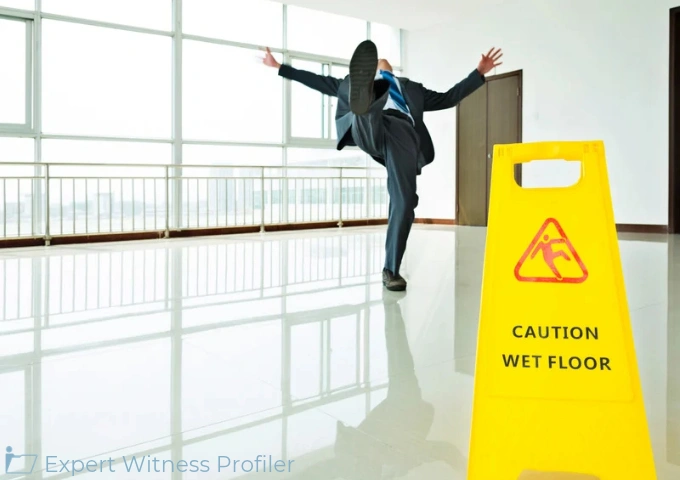
Floor Safety Expert Witness
David Michael Gill began working in walkway safety in 2007 and started consulting on slip-and-fall prevention sixteen years ago.
Gill has received the following certifications: 1) Walkway Auditor Certificate Holder (WACH) from the National Floor Safety Institute. 2) Certified Forensic Slip Expert (CFSE) from The National Institute of Forensic Studies. 3) Certified Walkway Auditor from the University of North Texas – Department of Engineering. 4) Certified Operator - BOT 3000E (Binary Output Tribometer) from Walkway Management Group (WMG).
Discussion by the Court
a. Qualification
Defendant pointed to Gill's lack of experience with cruise ships or maritime vessels to challenge his qualification. However, Gill is offered as an expert in slips and falls; where this slip and fall happens does not bear on the relationship of his experience and the traction of the surface in question. Because Gill is offered as an expert in floor safety and backs this up with nearly twenty years in the industry, he is qualified to testify as an expert.
b. Reliability
Defendant argued that Gill's failure to review materials and facts related to this case means that he did not create a valid theory to test or that his theory was insufficiently based on the facts. Similarly, Defendant argued that Gill's testing failed to account for the state of Hutchinson's shoes. But Gill's theory focused on the slip resistance of the tile when wet.
The dispute around whether the tile at issue was wet, the state of Plaintiff's shoes, Plaintiff's age or mobility, whether the tile manufacturer expected the tile to be walked on while wet, and floor standards of maritime regulations do not bear on the existence and testing of a valid theory. The extent to which Gill's theory may be related to the facts affects the helpfulness prong and the appropriate weighing of his testimony, not the reliability of his method.
Defendant next attacked Gill's process of rubbing a paper towel along the tile, looking at the tile under magnification, and dispersing water to watch for pooling. Gill stated that these procedures lack standards and are tests he has picked up over the years. Plaintiff argued that these are not scientific tests but should be understood as part of his examination. As long as this understanding is maintained, Gill's testimony regarding his process is appropriate.
Gill's statements regarding Defendant's mopping policies similarly do not bear on the reliability of his process. In fact, these comments in his report have no apparent relation to his tests whatsoever. However, Plaintiff has agreed that Gill's legal conclusions are inappropriate. Thus, Gill's comments regarding Defendant's duty of care, alleged negligence, legal liability, or the applicable binding legal standard should be stricken.
In short, Gill is an expert in walkway safety. Any testimony he gives in this matter should be limited to the testing he did and the practical, non-legal implications of that testing.
c. Helpfulness
Defendant made two key helpfulness arguments. First is that the floor was dry when Hutchinson slipped, but Gill's tests were on a wet floor, making them irrelevant. The second is that the relevant regulation is dictated by the vessel's flag state, and Gill's test did not speak to Defendant's compliance with that standard. The second reason does not warrant striking Gill's testimony, as Plaintiff has agreed that Gill will not testify to the legal effect of the flag state, and the implication of the standards identified by Gill is best left to the fact finder.
As to the first, as stated above, it must be addressed whether the floor was wet at the time of the fall. If the floor was wet, then Gill's testimony is at least moderately helpful. If the floor was not wet, then it is not helpful and instead runs the risk of confusing the issues for the jury in violation of Federal Rule of Evidence 403.
Any fact in the record that indicates the floor was wet must be construed in the Plaintiff's favor. However, this is lacking. As Plaintiff stated, "there was no water visible" but it "seemed like there was a film or something on the floor." "Film" simply means "a thin covering or coating" and does not mean that the floor was wet. He said that he did not see any water, and there was nothing on his hands after he pushed off the floor. His clothes were also dry. Plaintiff's friend Laura Mallet arrived while Plaintiff was still on the ground after his fall. She testified that the area did not seem unusual or slippery. Nothing in the record indicates that the floor was wet when Plaintiff fell. Thus, the conclusion for our purposes is that the floor was dry but had a thin covering or coating on it. As such, the Court found that Gill's testimony regarding the slickness of the floor when wet lacks probative value and is outweighed by the risk of misleading the jury.
Held
The Court granted Defendant's Daubert motion to strike Plaintiff's expert David Gill.
Key Takeaway
To be helpful, the evidence must satisfy Federal Rule of Evidence 403 - that is, the probative value of the evidence may not be substantially outweighed by the risk of unfair prejudice, confusing the issues, or misleading the trier of fact. The expert's testimony must help "the trier of fact to understand the evidence or to determine a fact in issue."
Case Details:
Case Caption: | Hutchinson V. Carnival Corporation |
|---|---|
Docket Number: | 1:24cv22973 |
Court Name: | United States District Court for the Southern District of Florida |
Order Date: | October 27, 2026 |