Immunology Expert Was Allowed to Opine on the Shipping Industry
Posted on August 28, 2026 by Shuva Guha Thakurta
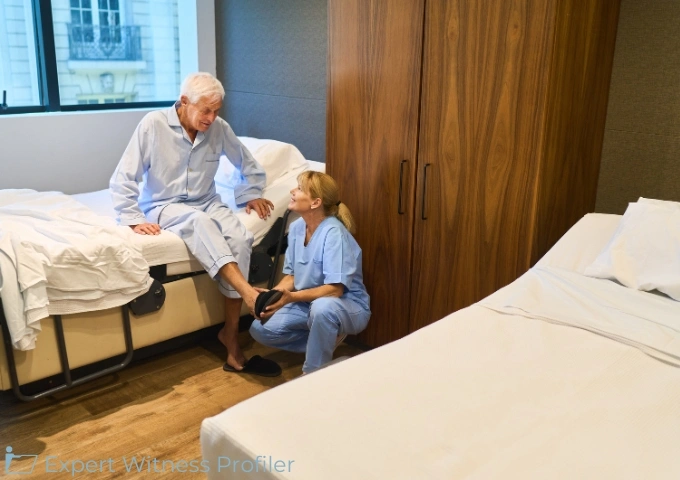
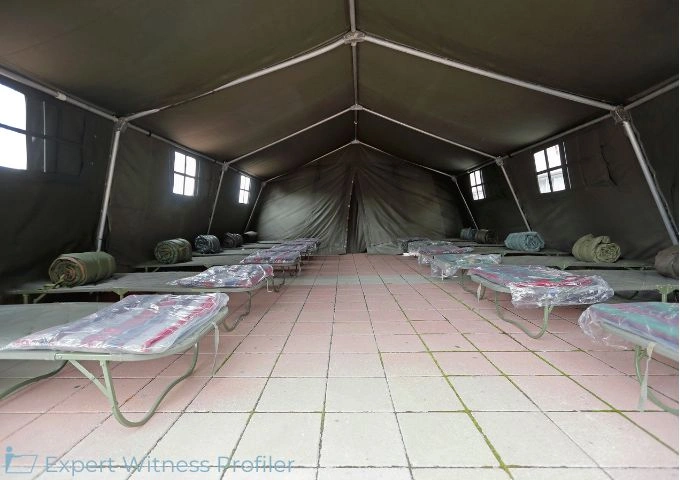
In 2020, COVID-19 outbreaks aboard ships created serious health risks to crew members, severe disruptions to vessel operations, and delay of delivery of critical supplies. Infected mariners were too ill to perform safety critical jobs, were unable to receive medical treatment, and some died. The US Coast Guard quarantined vessels, their crew and their cargo. This caused logistical chaos from delays upending complex, interwoven schedules. Defendant Sunrise Operations, LLC (“Sunrise”) transports food, fuel, and other essential supplies between the West Coast and Hawaii on its cargo vessels. Crew aboard Sunrise’s vessels live and work in confined quarters for extended periods at sea where social distancing is not possible.
To reduce the risk and impact created by COVID-19, Sunrise executed LOUs with its seafarers’ unions mandating all mariners going to sea be vaccinated. Plaintiff Andrew Hunt (“Plaintiff”) sought a religious exemption from the vaccination policy agreed upon and imposed by his union, Marine Engineers Beneficial Association (“MEBA”) and Sunrise so that he could sail as Chief Engineer. His request was denied because a Chief Engineer must work and live in tight quarters with fellow shipmates. Exempting Plaintiff from the vaccine mandate would expose the crew and ship to danger and disruption, especially if COVID-19 spread on the ship and the vessel was subject to quarantine or Coast Guard Captain of the Port Orders.
Plaintiff asserted claims for religious discrimination and retaliation arising from Sunrise’s enforcement of the vaccine mandate. Defendants have also filed a motion to exclude Plaintiff's rebuttal expert Dr. Michael Mina.
Immunology Expert Witness
Dr. Michael J. Mina is a public-health expert and physician-scientist with specific and deep expertise in vaccine and infectious-disease immunology, respiratory virus transmission, respiratory virus epidemiology, infectious-disease diagnostics, and the application of these disciplines to public health efforts, particularly surrounding infectious disease outbreaks and epidemics.
Discussion by the Court
Mina acknowledged that in late 2021 vaccination remained important and states that his opinions "should not be understood as minimizing the benefits of vaccination or the seriousness of COVID-19."
He opined on why vaccination status alone was not a reliable proxy for infectiousness, and why testing and layered mitigation were scientifically relevant to the risk of Covid-19. Mina also provided limited opinions applying his epidemiology opinions to the context of a ship based on his review of this case. Mina opined that allowing Plaintiff to remain unvaccinated but subjecting him to pre-boarding testing, day-of-testing, masking, eating in his stateroom, and other mitigation efforts would have reduced Plaintiff's transmission risk to a level comparable to, and most likely lower than, vaccinated but untested crew members who were not subject to the same restrictions.
A. FRCP 37(c)(1)
Defendants argued that Mina should be excluded under Federal Rule of Civil Procedure 37(c)(1) because his opinions go beyond the scope of a rebuttal expert and he was therefore required to be designated in Plaintiff's original Rule 26(a)(2) designation.
The Court has reviewed the expert report of Mina. Mina's opinions go into considerable depth about COVID-19 and the COVID-19 vaccination. Specifically, Mina refutes Defendants' expert testimony that supports Defendants' undue hardship affirmative defense. The Court found that even if Mina should have been disclosed earlier, any failure to disclose was harmless because Defendants still can still depose him prior to trial and because Defendants' more limited requests in the alternative are available to cure any prejudice.
B. Rules 702, 703, and Daubert
Defendants also argued that Mina is unqualified under Federal Rule of Evidence 702 to render opinions on the shipping industry and its response to the COVID-19 pandemic.
The Court agreed to the extent that Mina does not have the training or knowledge to opine on maritime standards, vessel command, Coast Guard enforcement, or how Sunrise should have operated its vessel. But as Plaintiff pointed out, Mina does not attempt to do so. Many of Mina's opinions applying his knowledge of COVID-19 to the shipping industry are quite general. To the extent Mina intended to testify beyond his immunology expertise, Defendants can object to specific questions at trial and test his qualifications on cross-examination.
Finally, Defendants contended that Mina's opinions are not relevant, helpful, or reliable under Federal Rules of Evidence 702, 703, and Daubert. Defendants relied almost exclusively on several unpublished district of Oregon cases decided by the same judge on the same day based on identical reasoning, striking Mina's testimony as irrelevant and because his opinions were not the product of reliable scientific methodology. However, one of the primary issues that the Oregon district court identified with Mina's report in these cases was that it relied on authorities not available to the Defendant when it considered the Plaintiffs' requests for religious accommodation. Mina's report in this case is distinguishable because almost all of the authorities Mina's report cites appear to have existed before December 31, 2021, when Plaintiff alleged that he was terminated. Thus, the Court found that Mina's opinions are relevant.
The Oregon district court also noted that Mina's opinions regarding the COVID-19 vaccination changed significantly after he left his position at Harvard in 2021 to take positions at biomedical and pharmaceutical device companies. To the extent that is the case, credibility determinations are fodder for cross examination and the Court found that Mina's testimony is sufficiently reliable such that it may be helpful to the jury.
Accordingly, the Court denied Defendants' motion to exclude Mina without prejudice to raising objections to specific questions that go outside the scope of his immunology expertise or beyond his role as a rebuttal expert, at the time of trial.
Held
The Court denied Defendants' motion to exclude the testimony of the Plaintiff's expert Dr. Michael Mina.
Key Takeaway
Shaky but admissible evidence is to be attacked by cross examination, contrary evidence, and attention to the burden of proof, not exclusion.
Case Details:
Case Caption: | Hunt V. Sunrise Operations LLC |
|---|---|
Docket Number: | 3:23cv6441 |
Court Name: | United States District Court for the Northern District of California |
Order Date: | August 21, 2026 |