Dance and Choreography Expert Partly Allowed to Opine on the Neglect of Known Risks in Dance Instruction
Posted on September 16, 2026 by Shuva Guha Thakurta
Carleton is a private liberal arts college in Northfield, Minnesota with approximately 2,000 students. Doe was a student at Carleton between 2019 and 2023. While she was a student, Jane Doe got involved in dance, first participating in Carleton's social dance club, then taking two salsa classes and an independent study in dance with Carleton staff member Donald Smith. Over time, Doe and Smith's relationship evolved, becoming inappropriate and abusive. Doe now sues Carleton based on its hiring, retention, and supervision of Smith under theories of direct and vicarious liability.
Defendant Carleton College filed a motion to exclude the expert testimony of Plaintiff's expert Kaori Kenmotsu.
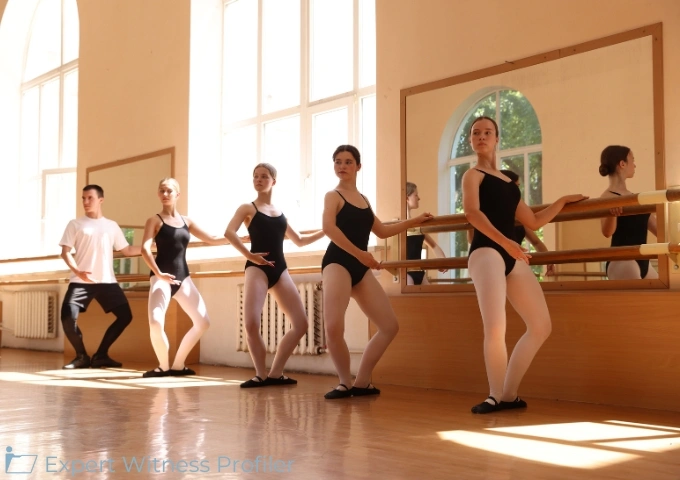
Dance and Choreography Expert Witness
Kaori Kenmotsu is a former Senior Lecturer of dance and performing arts with over twenty-five years of experience in higher education and professional choreography. Her academic work has focused on "dance pedagogy, power dynamics in the arts, and cross-cultural perspectives in performance." Her research and teaching has included "issues of body autonomy, consent, and ethical pedagogy within dance and theater."
She earned her J.D. from Mitchell Hamline School of Law, along with a certificate in conflict resolution theory and practice in 2022.
Discussion by the Court
Carleton argued that Kenmotsu's expert testimony should be excluded because she is not qualified to opine on the issues included in her report, she did not cite any reliable facts or data, and her opinion will not assist the jury.
Kenmotsu provided four opinions that can be broken down into three categories: (1) the heightened risk of sexual misconduct in dance instruction; (2) the heightened duty of care Carleton owed due to this risk; and (3) that Carleton breached that duty. She reviewed several depositions and email exhibits from this case, as well as articles on the topics of power dynamics and sexual misconduct in dance.
After a thorough review, the Court allowed Kenmotsu to testify about the heightened risk of sexual misconduct in dance instruction, which includes her testimony about hierarchies and dance pedagogy. Kenmotsu's experience is significant and qualifies her to give an opinion on risks in dance instruction, especially in the college setting. This information will be useful to the jury because the average jury is not familiar with college dance instruction and the surrounding culture. Carleton's arguments are well taken but go more to Kenmotsu's credibility and the weight the jury should give her opinion. Carleton is, of course, welcome to cross-examine Kenmotsu on those points and make those arguments in closing at trial.
However, the Court did not allow Kenmotsu to testify about the duty of care Carleton owed and that Carleton breached that duty because Kenmotsu does not have sufficient experience to testify about these topics. Her experience hiring guest artists to work with her students as a faculty member and program director do not qualify her to speak to the duty of care owed more generally. Moreover, Doe has not shown that Kenmotsu's testimony is sufficiently reliable on these issues.
Held
The Court granted in part and denied in part Defendant Carleton College's motion to exclude the testimony of Kaori Kenmotsu.
Key Takeaway
An expert may rely on their own experience to form their opinions, but they also must explain how that experience leads to the conclusion reached, why that experience is a sufficient basis for the opinion, and how that experience is reliably applied to the facts.
Case Details:
Case Caption: | Doe V. Carleton College |
|---|---|
Docket Number: | 0:24cv2300 |
Court Name: | United States District Court, Minnesota |
Order Date: | August 20, 2026 |