The Economics Expert Was Allowed to Testify Despite Accounting for Stigma Damages
Posted on September 28, 2026 by Shuva Guha Thakurta
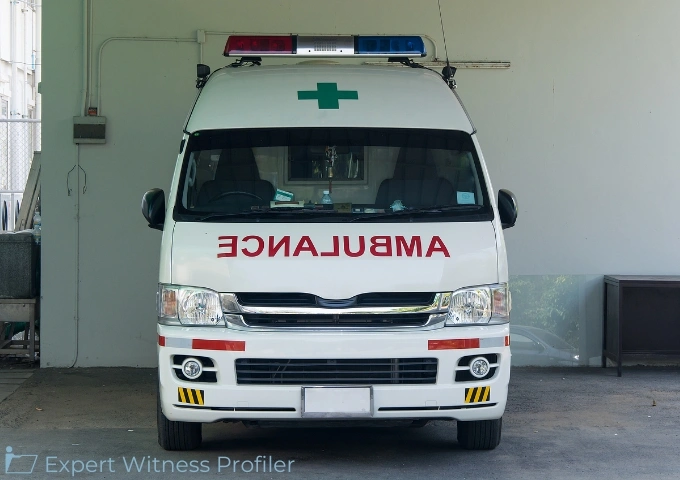
Ryan Lynn owns and operates Windsor EMS, a private ambulance company serving Galveston, Harris, Chambers, and Brazoria counties. In 2012, Texas City passed an ordinance requiring private ambulance companies to meet certain criteria to obtain an operations permit within the city.
The ordinance provides that renewal applications should be submitted "between December 1 and January 31" and that companies who "fail to renew their permit before January 31 of each year shall have their permit declared vacant and [be] removed from the transfer service rotation master list." Operating an ambulance service with an expired permit is a violation of the ordinance.
Captain Wendell Wiley was hired as the city's EMS administrator and permit officer in 2015. The Plaintiffs alleged that within a few months of obtaining this position, Wiley asked to be put on Windsor EMS's payroll. Windsor refused due to "an apparent conflict of interest," which allegedly prompted Wiley to "revoke" Windsor's operating permit and "systematically harass" Windsor.
The Plaintiffs sued the city and Wiley pursuant to the Court's federal-question jurisdiction under 28 U.S.C. § 1331, claiming the Defendants violated Windsor and Lynn's Fourteenth Amendment rights, engaged in unreasonable restraint of trade in violation of the Sherman Act, and tortiously interfered with private business contracts.
The Plaintiffs sought both monetary and injunctive relief, alleging that they have lost "more than $2 million per year" due to the Defendants' actions. The Defendants have also filed a motion to exclude the expert testimony of Dr. Kenneth Eugene Lehrer, which the Plaintiffs offered to show Windsor's economic damages.
Economics Expert Witness
Dr. Kenneth Eugene Lehrer is an economist and financial consultant, who has four degrees from New York University: a Bachelor of Science (Finance), a Master of Business Administration (Banking), a Master of Arts (Economics), and a Doctorate in Urban Economics.
Discussion by the Court
The Defendants argued that Lehrer's opinions should be excluded because he based many of his calculations on numbers provided by Alton Henderson, Windsor's Business Development Director. The Defendants claimed that Lehrer "relied exclusively upon a lay witness— Henderson—to provide the entire damage model, data, analysis and computation he used without independent verification," alleging that "Lehrer simply attached Henderson's unproven and speculative damage model and incorporated it by reference in his report, parroting Henderson's opinions in his testimony." The Court disagreed with this characterization of Lehrer's testimony and report. First, Lehrer specifically testified that he did not blindly adopt the numbers provided by Henderson for his report. Second, Lehrer has explained that he needed to rely on financial reports from Windsor because the company is not publicly traded, meaning that he could not obtain numbers from SEC filings or other public records. Accordingly, the Court concluded that Lehrer reasonably relied on the figures provided by Henderson, and his report is based on sufficient facts and data. The Defendants' concerns over Lehrer's reliance on Henderson may be properly addressed on cross-examination, and these concerns do not render Lehrer's testimony inadmissible.
The Defendants further objected to Lehrer's testimony by arguing that his "assumptions are not reasonable and his methodology is not sound." In addition to deficiencies in Henderson's record collection, the Defendants argued that Lehrer's methodology is not sound due to several assumptions made in his report, which the Court will address below:
• Lehrer assumed that Windsor would generate a profit from 2017 onward, "even though Windsor did not generate any positive net income for any year documented in his report until 2018, after Windsor lost its city permit." The Court agreed with Windsor that Lehrer provided sufficient explanation for this assumption.
• Lehrer assumed that "all of Windsor's service calls were completed and fully paid." The Defendants suggest that this assumption was unreasonable, but that objection does not render Lehrer's opinions inadmissible.
• Lehrer assumed that Windsor received no revenue for work performed within Texas City after losing its permit in 2017, despite evidence that Windsor "continued to operate illegally within the [c]ity after the vacatur of its permit." Again, this objection goes to the reasonableness of Lehrer's assumption, and it does not render his damages estimate inadmissible.
• Lehrer assumed that Windsor's calls in Texas City would increase by 15% year-over-year, without analyzing "whether Windsor's business operations and infrastructure, or the city's population and medical community could even support that level of growth." The Defendants might disagree with this assumption. But the Court again finds that Lehrer adequately explained his reasons for it, and this assumption by itself does not render his testimony inadmissible.
Finding that Lehrer's assumptions were made with sufficient facts and data, and that he used sufficiently reliable methods in reaching his conclusions, the Court declined to exclude Lehrer's testimony because of the assumptions he made.
Lastly, the Defendants argued that Lehrer's opinions should be excluded because "he did not consider alternate causes of damage," and because his report accounts for "stigma" damages, which are not recoverable in this case. Accordingly, the Court will not exclude Lehrer's report simply because he assumed that the Defendants were responsible for Windsor's losses. Second, because the Court's gatekeeping function applies "to principles and methodology," rather than conclusions, Lehrer's report is not inadmissible simply because it includes a category of damages that may ultimately be unavailable to Windsor. Windsor's success on its remaining claims, as well as Windsor's resulting damages, are properly "left for the jury's consideration."
Held
The Court denied the Defendants' motion to exclude Dr. Kenneth Eugene Lehrer's expert testimony.
Key Takeaway
The Court found that (1) Windsor's designated expert report complies with Federal Rule of Civil Procedure 26(a)(2)(B); (2) Lehrer is qualified to offer expert testimony in this case; and (3) Lehrer's proposed testimony is based upon sufficient and reliable facts or data, is relevant, and would assist the trier of fact.
Case Details:
Case Caption: | Lynn V. City of Texas City |
|---|---|
Docket Number: | 3:19cv44 |
Court Name: | United States District Court, Texas Southern |
Order Date: | September 24, 2026 |