Safety Engineering Expert Not Allowed to Opine on a Design Defect in Exercise Equipment
Posted on November 4, 2026 by Shuva Guha Thakurta
Lynda Edwards ("Edwards") and her husband Richard Edwards (together, "Plaintiffs") brought this Action against Cybex International, Inc. ("Defendant"), alleging defects in the design and warning labels of Defendant's 45-degree inclined leg press machine (the "machine") caused Edwards's injuries and caused her husband to suffer loss of consortium.
Plaintiffs' primary expert in this case is C.J. Abraham. Abraham's background and training in the use and production of other exercise equipment, with his engineering experience as helpful context, make him qualified to testify as to the subject matter of this case—an alleged design defect in exercise equipment and how that equipment functions.
Plaintiffs' other expert, Dr. Cameron Trepeck, is a rebuttal expert to Defendant's expert, Dr. Scott McLean. Both parties sought to exclude one another's expert testimony.
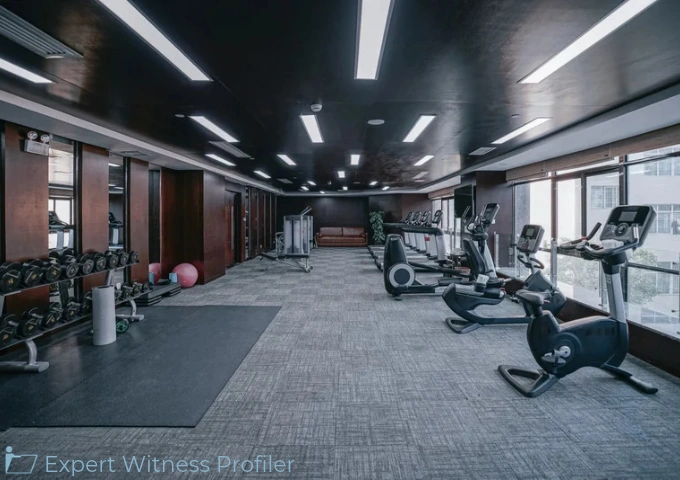
Safety Engineering Expert Witness
Dr. C.J. Abraham has over 45 years of professional experience in safety engineering and design, sports accident reconstruction, human factors analysis, safety analysis, risk analysis, forensic investigations, warnings and instructions, and hands-on and general supervision standards. Abraham is also certified in product warnings and instructions, both written and oral.
For decades, Abraham has evaluated hundreds of personal injury accidents and lawsuits involving a wide variety of exercise machines and products in order to evaluate the potential liability, if any, of the manufacturer and/or seller of the machine or product.
Biomechanics Expert Witnesses
Dr. Scott McLean brings over 20 years of experience in injury biomechanics, wearable technology development and application, and real-world product design and evaluation techniques.
Cameron Trepeck has his Bachelor of Science, Master of Science, and Doctor of Philosophy in Mechanical Engineering with research focused on Biomechanics.
Discussion by the Court
a. Sufficient Facts or Data
The Court found that Abraham's report is not based on sufficient facts or data. Abraham claimed his report is based on his "review of documents and discovery exchanged by the parties," his "professional training, work experience, professional duties," and "prior consultation in similar cases." But at his deposition, Abraham testified that he did not review critical documents and discovery before offering his opinions. For example, he had not reviewed Edwards' deposition before producing either his initial report or his rebuttal report. Nor had he inspected the machine, which was made available in discovery, until long after his report and deposition, and his rebuttal report includes no findings from his subsequent review of the discovery, if he conducted any such review. That alone is fatal.
There is more. Abraham explained that his two alternate design theories—a stop bar and a horizontal leg press—are based on, respectively, something he came up with "in [his] head," and a machine he used on occasion himself in physical therapy.
Plaintiffs thus have not proven a sufficient basis in facts or data for Abraham's opinions.
b. Reliable Principles or Methods
Plaintiffs have also not shown that Abraham's testimony is the product of reliable principles and methods. In general, Abraham's report and deposition do not explain what testable, peer-reviewed, low-error, or "generally accepted" methods with scientific foundations he uses. Nothing in the report explains how the "partially latched" state works or how Edwards could have felt the handles engage even when they did not—i.e., specifically how the machine is defective, the core of Plaintiff's case.
Plaintiffs ascribe a few methodologies to Abraham, all of which either he did not, in fact, apply, or which the Court rejects under Daubert. Plaintiffs pointed first to his deposition testimony that "basic engineering, safety engineering principles" undergird his report. So generic a "method" will not do without further explanation.
Plaintiffs next argued that Abraham's method is the "hierarchy of controls," purportedly, a three-step process by which (1) risks must be designed out, (2) guarded against, or (3) warned of, in that order. But neither that phrase nor that process appears in the portions of Abraham's report and deposition that Plaintiffs cite, nor anywhere else in the record.
Abraham does not explain where the process comes from, or why it would follow from that process that, as he contends, every product must be risk-free, which is inconsistent with New York law.
Abraham, at some points in his deposition, shed more light on his methods. He testified that he "looked at what happened in the accident and how it could happen" and whether "that particular incident" could have been prevented; whether "alternative safer methods of creating an apparatus that would be completely safe and void of any risks" existed; and did "research" on whether such an apparatus was "available in the stream of commerce" doing "similar exercises" but "eliminating that risk."
Another part of his methodology for assessing safe alternative designs is "doing a lot in his head" to think of an alternative, and "then what he does is that he makes prototypes" of those safe alternative designs to evaluate them.
The Court assumes without deciding that these are both sound methodologies for someone of Abraham's experience and engineering background in a design defect case.
c. Application to the Facts of the Case
The Court found that Abraham did not reliably apply any of what he described as his methods to the facts of this case. First, although Abraham said it was part of his method to do so, he testified that he did not review Edwards's deposition prior to his report or his own deposition, and although he said part of his method involved "research" on alternate designs for the machine in the "stream of commerce," that began and ended with a machine he used himself on occasion at his physical therapist's office.
Second, Abraham's methods for deriving and evaluating new, safe alternative designs were also not reliably applied to the facts of this case. Abraham proposed a permanent stop bar as another safe alternative design, which is mentioned once in passing in his report and is not diagrammed, tested, or otherwise explained. At his deposition, he explained that he had not considered the possible effects of the stop bar on the machine's utility because—though he said this was part of his method—he did not make or test a prototype because he, simply, "in his head knows that if the machine had something like that there," the injury would not have occurred, and that it was "not his job" to consider its possible implementation.
Third, the opinions offered as to the sufficiency of the warnings on the machine are also not the result of the reliable application of reliable principles. Plaintiff's proposed warning is as follows, reproduced from the expert report:
DANGER!
AFTER COMPLETING THE LEG LIFTS MAKE SURE YOU MANUALLY LOCK THE LOADED PLATE BEFORE GETTING UP AND OFF THE CYBEX LEG LIFT
FAILURE TO LOCK THE LOADED PLATE MAY RESULT IN A PERMANENT BODILY, PERMANENTLY HEAD AND BRAIN INJURY OR DEATH
Abraham admitted that he wrote his proposed warning “off the top of [his] head.” He criticized the Defendant’s warnings for not following ASTM, ANSI, and ISO protocols, but he never explained how his own warning did. His only justification was that it was “a lot more honest.” He also conceded that the only meaningful difference between his warning and the one on the machine was the signal word: he used “danger” where the machine used “warning.”
Both sides agree on what those words mean. “Warning” signals a risk that could happen, and “danger” signals a risk that will happen. At oral argument, however, Plaintiffs’ counsel acknowledged that the machine’s hazards were ones that could occur, not ones that necessarily would. For example, if Edwards had stepped off the machine within one minute and twenty-two seconds of finishing her set, she would not have been injured. The Court therefore found it unclear how Plaintiffs’ own expert reached the opposite conclusion and chose “danger.”
Accordingly, because this testimony was not based on sufficient facts or data and because it was not the product of reliable methods reliably applied to the facts of this case, the Court granted Defendant's motion to exclude Abraham's testimony.
It should be noted that Plaintiffs asserted three causes of action in their Amended Complaint, as trimmed by the voluntary dismissals discussed above: (1) a design defect claim, alleging Defendant designed an unreasonably unsafe product; (2) a warning defect claim, alleging Defendant did not properly warn users of the risks of the product; and (3) a loss of consortium claim on behalf of Edwards's husband, which is derivative of the other two claims. Defendant filed a motion for summary judgment on all three claims.
It should be noted that Plaintiffs' remaining claims are strict liability and negligence theories of design and warning defects, and a derivative loss of consortium claim. Because Plaintiffs offer no admissible expert evidence as to a safe alternative design, nor any explanation of what lay evidence on this issue a jury could consider, the Court must grant summary judgment to Defendant on Plaintiffs' design defect claim. As with Plaintiffs' design defect claim, because there is nothing on the record other than Abraham's testimony that would suggest the warning was defective, the exclusion of that testimony requires the Court to grant summary judgment on Plaintiffs' warning defect claim. Accordingly, because the Court granted summary judgment on the design and warning defect claims, the Court granted summary judgment on the loss of consortium claim as well. Because the Court granted summary judgment to Defendant, Defendant's motion to exclude Trepeck and Plaintiff's motion to exclude McLean are denied as moot.
Held
The Court granted Defendant's motion to exclude Dr. C.J. Abraham, granted Defendant's Motion for Summary Judgment, and denied the remaining motions as moot.
Key Takeaway
Numerous courts have excluded expert testimony regarding a safer alternative design where the expert failed to create drawings or models or administer tests, and the Court does the same here.
Case Details:
Case Caption: | Edwards V. Cybex International, Inc. |
|---|---|
Docket Number: | 7:22cv2985 |
Court Name: | United States District Court for the Southern District of New York |
Order Date: | September 25, 2026 |