Political Science Expert Not Allowed to Opine on the Degree of Threat
Posted on October 21, 2026 by Shuva Guha Thakurta
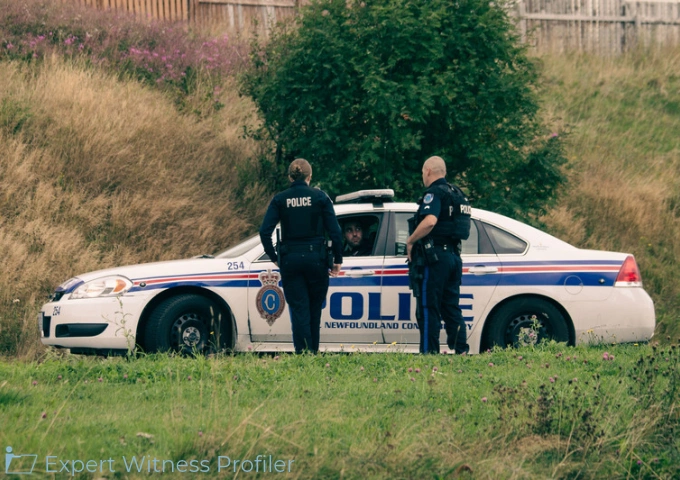
Plaintiff Colleen McCullough brings this excessive force action against Sergeant Brendan Caraway, Captain Mark Cota and the City and County of San Francisco ("City") based on events that occurred at a March 2, 2024 pro-Palestine demonstration, when Sergeant Caraway struck McCullough's hand with a baton, causing significant injuries.
Plaintiff filed a motion to exclude the testimony of Defendants' proffered expert Dr. Ron Hassner on the grounds that the opinions offered by Hassner do not meet the requirements of Federal Rules of Evidence 702.
Political Science Expert Witness
Dr. Ron E. Hassner holds a master's degree in international affairs from Columbia University and a Ph.D. in political science from Stanford University. He is a professor of political science at the University of California, Berkeley.
Discussion by the Court
Defendants provided Hassner with 91 photographs taken on March 2, 2024, that display graffiti "painted during" the Protest that day. Hassner, in turn, reviewed the photographs and classified the graffiti shown in them as "threatening graffiti, potentially threatening graffiti, and non-threatening graffiti." He found that approximately one third of the photos depicted "threatening" graffiti, including graffiti proclaiming "Long Live Hamas"; graffiti showing "the inverted red triangle that Hamas uses to identify Israeli targets on the battlefield"; graffiti calling for "a death to Israel or a death to Zionism[,]" and "death to America"; and graffiti equating the Israeli Defense Force ("IDF") with the Ku Klux Klan ("KKK") and San Francisco Police Department ("SFPD").
There is no dispute that Hassner is an expert in Middle East politics and is qualified to offer testimony about the political and historical context in which certain phrases and symbols depicted in graffiti found along the Protest route have been used. Nonetheless, Hassner's opinions fall short of the standards set forth in Rule 702 and Daubert for several reasons. First, his testimony will not assist the trier of fact. In particular, the key questions at trial will be: 1) whether a reasonable officer in Sergeant Caraway's position, under the same circumstances and knowing what Sergeant Caraway knew, would have used the amount of force that Sergeant Caraway used against Plaintiff; and 2) whether Sergeant Caraway was substantially motivated by animus against the pro-Palestine message of the protesters. Both of those questions turn on the messages Sergeant Caraway was aware of when he used force against Plaintiff, but it is undisputed that Sergeant Caraway saw none of the graffiti that Hassner reviewed.
Second, Hassner has offered no reliable methodology in support of his assessment of the degree of "threat" embodied by different phrases he observed in the photographs he reviewed. Particularly troubling is his failure to explain how he has determined that the various phrases are indicative of the various threat levels he has described in the context of a political demonstration such as the one here. Defendants sought to offer Hassner's opinions to show that the protesters posed a threat to the safety of the officers and to individuals in the Israeli consulate (or that the officers reasonably believed that they did), yet Hassner has not pointed to any reliable methodology for drawing the conclusions that he did with respect to threat levels, such as correlating similar graffiti messages along march routes with actual violence or attacks on buildings associated with Israel at other pro-Palestine protests. Nor did Hassner's opinion that it "seems wise to adopt a wary interpretation of . . . borderline messages" offer a substitute for a reliable methodology. Therefore, the Court found that Hassner's opinions concerning the degree of threat embodied by different phrases and symbols depicted in graffiti along the protest route did not meet the "scientific knowledge" requirement.
Held
The Court granted Plaintiff's Daubert motion and will exclude the opinions of Dr. Ron Hassner at trial.
Key Takeaway
The opinions in Hassner's report are too tangential to the issues of the case to meet the "fit" requirement of Rule 702 and Daubert. Furthermore, it is not clear that a lay person needs an expert to understand the significance of a phrase such as "death to Israel" or "death to America." Thus, many of Hassner's opinions invade the province of the jury as factfinder.
Case Details:
Case Caption: | McCullough V. City & County of San Francisco |
|---|---|
Docket Number: | 3:24cv3260 |
Court Name: | United States District Court for the Northern District of California |
Order Date: | October 12, 2026 |