Glass Expert Not Allowed to Opine on Jar Failure
Posted on September 2, 2026 by Shuva Guha Thakurta
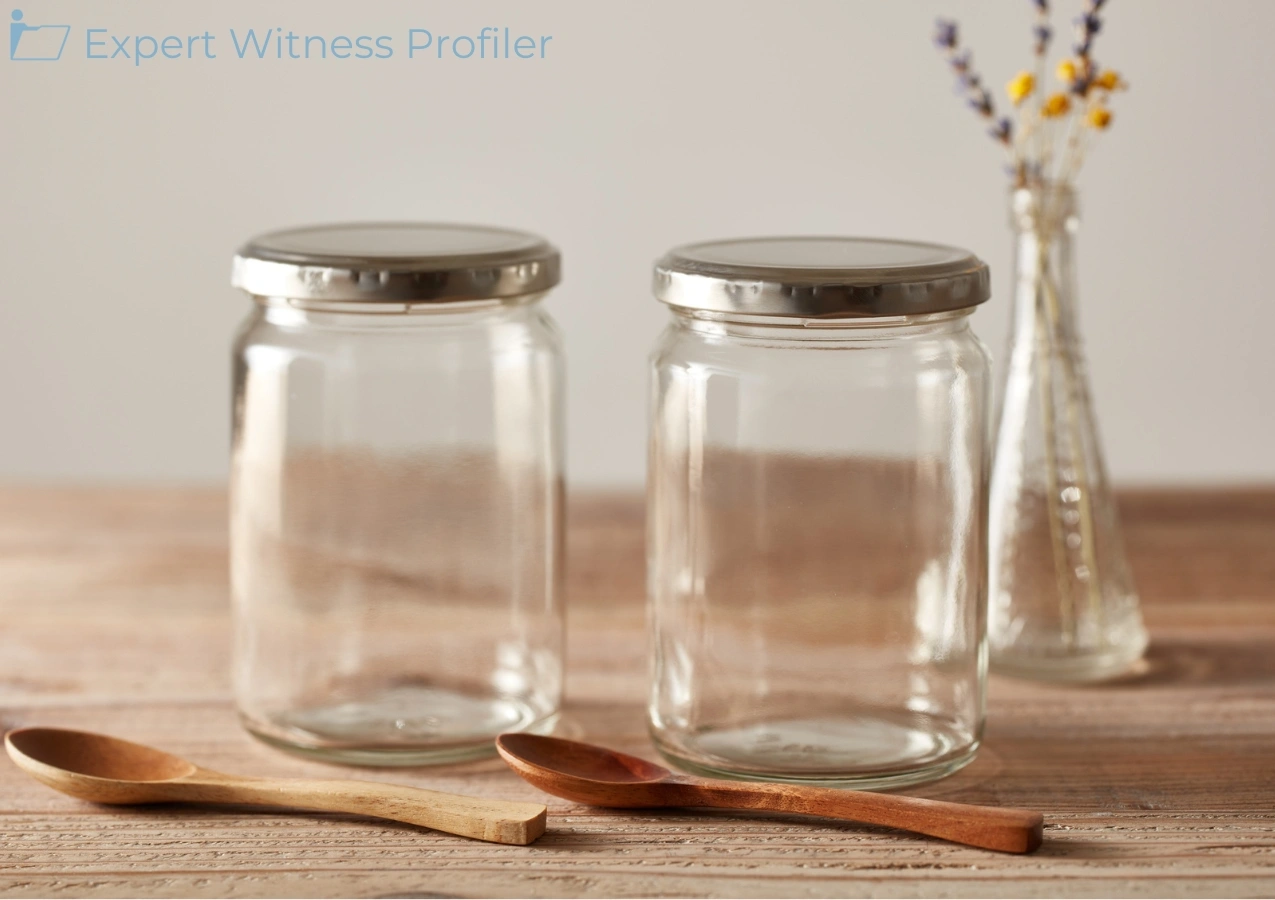
Plaintiff Willaim New brought this products liability action against Defendants Walmart, Inc. ("Walmart") and Rubbermaid Incorporated ("Rubbermaid") (together, "Defendants") after a mason jar purportedly manufactured by Rubbermaid and sold by Walmart allegedly shattered and injured New.
New retained an expert, Dr. Paul F. Düffer, to opine on the cause of the subject jar's failure. Düffer was unable to test the subject jar or any of the jars from the same package, but submitted an expert report listing several hypotheses for the failure of the jar as described by New.
Glass Expert Witness
Dr. Paul F. Düffer has written a number of articles that address the practical aspects of glass surface behavior which have appeared in various trade publications and conference proceedings. Duffer holds nine United States and several foreign patents in the area of glass protective interleaving materials and anticorrosive packaging systems.
Düffer attended St. Vincent College in Latrobe, Pennsylvania where he earned a Bachelor of Science degree in Chemistry. After a short tenure as a laboratory assistant, Düffer enrolled at the University of Pittsburgh where he earned M.S. and Ph.D. degrees in the field of physical chemistry.
Discussion by the Court
Walmart argued that Düffer's expert opinions should be excluded as unscientific and unspecific. In his expert report, Düffer stated that "catastrophic failure of the jar occurred which leads one to conclude that residual internal stresses and/or physical defects which emanated from vibrations and motion incurred during glass-to-glass contact during transport were contributing factors." Düffer also stated that the absence of any mention of quality checks concerning annealing during the deposition of Rubbermaid's representative "raises a legitimate question about the possibility the 'Subject Jar' exhibited residual stresses which contributed to the failure mechanism that resulted in New's injuries."
However, Düffer conceded during his deposition that he never had the opportunity to examine either the subject jar or the other jars in the package, and that "the precise defect cannot be identified."
Walmart argued that these opinions are not admissible evidence because Düffer presents no evidence as to the subject jar's specific defect and that his "'hypothesis' . . . does not meet the expert admissibility standards of Rule 702 as it not 'based on sufficient facts or data,' nor is it 'the product of reliable principles and methods.'"
The Court is persuaded. Düffer conceded at his deposition that his opinions rely primarily on New's testimony and, at most, some general scientific principles, but rest on no scientific data or testing, or knowledge about how such jars were handled or transported.
Ultimately, then, Düffer's expert opinion amounts to little more than a theory of res ipsa loquitur.
Held
The Court granted Walmart's motion to exclude Paul Düffer's expert opinions.
Key Takeaway
In place of an admissible opinion on product defect, Düffer offered speculative hypotheses about how the product could have possibly been defective without any factual or scientific support for his surmise.
Case Details:
Case Caption: | New V. Rubbermaid Incorporated |
|---|---|
Docket Number: | 1:24cv11277 |
Court Name: | United States District Court, Massachusetts |
Order Date: | August 31, 2026 |