Mechanical Engineering Expert's Mix-and-Match Opinions Excluded
Posted on December 24, 2025 by Expert Witness Profiler
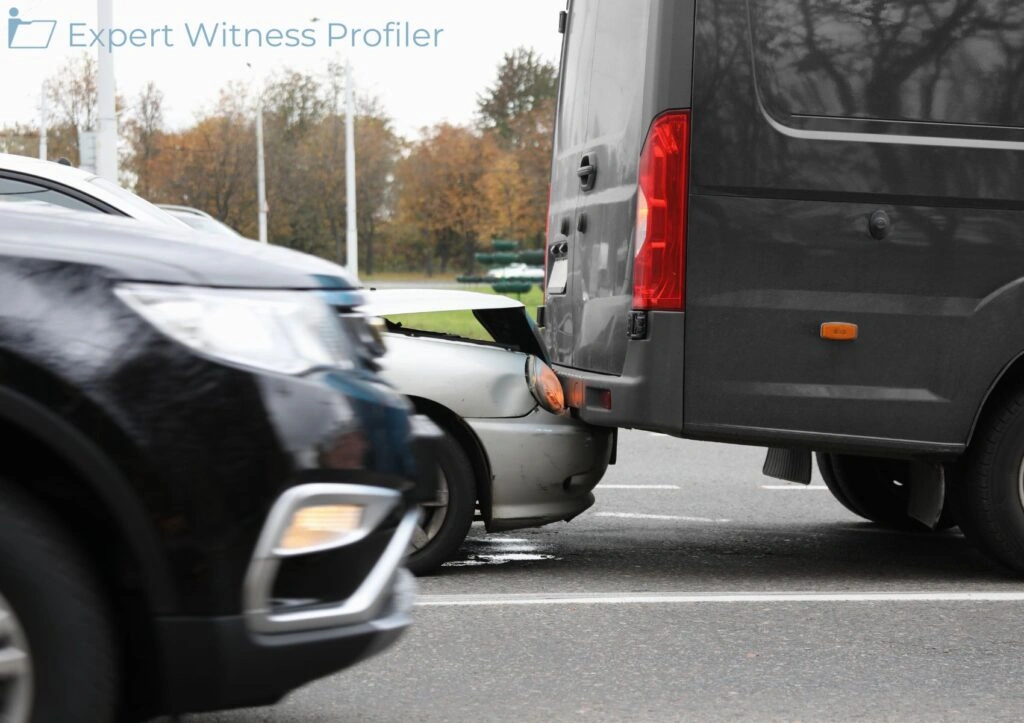
Plaintiff Taylor Lavergne sued Hyundai Motor Company and Hyundai Motor America (collectively, “Defendants”) in connection with injuries she allegedly sustained during a rear-end collision between a 2013 Jeep Wrangler and a 2016 Hyundai Accent (the “subject vehicle”) in which she was a passenger.
Plaintiffs designated Brian Herbst as their mechanical engineering expert. Hyundai Motor Company and Hyundai Motor America's motion to exclude testimony of Brian Herbst under Rule 702.
Mechanical Engineering Expert Witness
Brian Ruben Herbst is a principal in the automotive engineering firm of SAFE Laboratories, L.L.C. He is routinely called upon to evaluate vehicle accidents and to analyze, test and evaluate various vehicle safety systems.
His engineering experience has spanned more than 20 years, almost all of which has related directly to motor vehicle testing, crashworthiness, restraint system, and structural analysis. Herbst has been called upon to analyze several hundred real world accidents. He is a member of the Society of Automotive Engineers (SAE), American Society of Mechanical Engineers (ASME), and the National Society of Professional Engineers (NSPE).
Discussion by the Court
In his report, Herbst opined that "[w]ith the amount of rear crush that occurred in the accident, the subject vehicle failed to maintain an acceptable survival space." Herbst also stated that he "could design a rear structure to be much stronger, not much more expensive or heavy, just as attractive and able to dramatically reduce crush and prevent serious occupant injury in a rear impact crash," compared to the subject vehicle.
To that end, Herbst outlined various methods to improve a vehicle's rear strength:
- "Replacing low-strength steel with high-strength steel (i.e. Boron steel is five times stronger than conventional steel)";
- "Implementing and/or improving load paths";
- "Implementing internal reinforcements, including tubular steel reinforcements";
- "Implementing external reinforcements, such as stiffening ribs or doublers"; and
- "Reinforcing component voids with structural foam."
Herbst opined that each of these modification methods "employ basic engineering principles which are standard industry practices" and that all of the methods "were technologically and economically feasible at the time of the manufacture of the accident vehicle."
Additionally, his list of modification options "can be mixed and matched as desired," and "it is not necessary for all the modification options to be incorporated to produce a strong and non-defective rear structure."
Defendants argued that Herbst's opinions regarding his alternatively designed Hyundai were unreliable and therefore inadmissible because Herbst employed a variable design approach rather than a single design alternative.
Analysis
Herbst offered as an alternative design an exemplar 2012 Hyundai Accent reinforced with a combination of higher-strength steel, additional welding and expanding rigid foam.
Herbst opined that his exemplar alternative design need not be employed in its entirety, but that his proposed "strength improvement design options can be mixed and matched as desired," and that "it is not necessary for all the modification options to be incorporated to produce a strong and non-defective rear structure."
Defendants complained that Herbst is not committed to one alternative design, and that he could not identify the strength of steel used in any other comparator vehicle.
Moreover, Defendants remarked that Herbst's opinion includes any unspecified combinations of his five proposed modification methods for a "non-defective rear structure." Defendants argued that this noncommittal approach would prejudice Defendants because Herbst has not established that any one of those methods individually "was capable of preventing the claimant's damage."
In her opposition, Plaintiff informed the Court that Herbst will testify as to only the alternative design used in Plaintiff's Rear Impact Test. However, Defendants asked the Court to grant their motion as to "mix-and-match" opinions regarding design options. The Court agreed with Defendant here that the mix-and-match opinions are problematic and should not be permitted at the trial of this matter.
Defendants contended that Plaintiff's Rear Impact Test is unreliable due to its position that Plaintiff's Rear Impact Test was not substantially similar to the subject collision and that Plaintiff failed to show that another way to design the product existed. The Court issued a previous Memorandum Order that found that there was substantial similarity and that non-compliance with FMVSS 301-R did not justify exclusion of the alternative design.
Held
The Court granted in part and denied in part Hyundai Motor Company and Hyundai Motor America's motion to exclude the testimony of Brian Herbst.
Key Takeaway
Herbst was prohibited from testifying or offering any evidence of a variable design approach ("mix-and-match") because he offered no measurements, testing, or other quantification to support his assertion that "mixing and matching" his proposed modifications would result in a "strong ad non-defective rear structure."
Case Details:
| Case Caption: | Lavergne V. Hyundai Motor Co. |
| Docket Number: | 2:21cv4236 |
| Court Name: | United States District Court, Louisiana Western |
| Order Date: | December 12, 2025 |