Dentistry Expert's Testimony on Conscious Sedation Admitted
Posted on July 14, 2025 by Expert Witness Profiler
This case stems from allegations by the U.S. Department of Justice that Dr. Eli Jarjoura, a licensed dentist, illegally prescribed Schedule IV controlled substances without a "legitimate medical purpose . . . in the usual course of his professional practice."
Jarjoura instructed the patient to take one 0.25 mg tablet of triazolam and one 0.5 mg or 1.0 mg tablet of alprazolam—both Schedule IV sedatives used in conscious sedation dentistry—one hour before the procedure, and to return any remaining tablets to Jarjoura for administration, if needed, or for disposal.
Dr. Bruce D. Horn is DOJ's expert witness on dentistry and sedation practice. Horn's report, submitted pursuant to Rule 26, opines on "whether prescriptions written and issued by [Defendant] . . . were (i) issued for a legitimate medical purpose; and/or (ii) issued within the ordinary course of professional practice."
Horn concluded that Defendant's prescription practices regarding certain sedation drugs had no "legitimate medical purpose and were outside the course of usual professional practice."
Defendant filed a motion to exclude Horn's opinions under Rule 702.
Dentistry Expert Witness
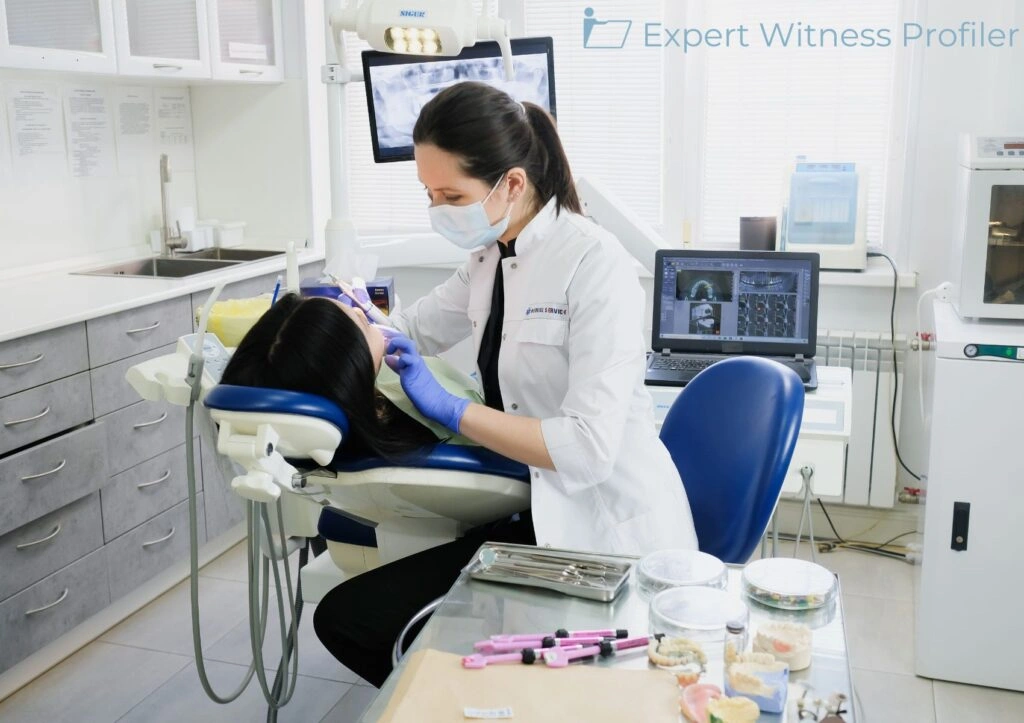
Dr. Bruce D. Horn is a dentist in a private practice setting and has been practicing since 1981. He holds an active permit with the Oklahoma Board of Dentistry for parenteral conscious sedation and has served on the Oklahoma Board of Dentistry in a variety of roles.
Discussion by the Court
Specifically, Horn made three related contentions. First, Horn noted that Defendant prescribed abnormally high quantities of the benzodiazepines Triazolam and Alprazolam despite no "reliable, accepted publication supporting the combined use of these two sedatives in sedation dentistry." Second, Horn contended that Defendant's recordkeeping was deficient. In his words, "sedation dental practice . . . should be based on the individual characteristics of each patient," and patient records should contain these details to ensure "safe dosing" but Defendant's records lacked the requisite detail. Third, Horn asserted that Defendant could not have effectively monitored his patients given the amount of sedation medication administered. Such levels of sedation medication, Horn argued, would have placed Defendant's patients in physical danger.
The Defendant argued that Horn’s expert opinion should be thrown out under Rule 702, claiming he wasn’t qualified to speak on prescription drug safety or drug interactions. Their reasoning? Horn was trained as a dentist—not a pharmacist—so he allegedly lacks the expertise required for that kind of analysis.
Defendant further argued that certain portions of Horn's report were either irrelevant or prejudicial. Defendant cited to portions of the report in which Horn commented on the following topics: (1) the presence of expired sedative antagonists in Defendant's office stock; (2) Defendant's practice of intravenously administering the benzodiazepine Midazolam; (3) the accuracy of Defendant's medical recordkeeping; (4) appropriate dosing of prescriptions kept in Defendant's office stock; (5) the application of the Oklahoma Board of Dentistry statutes and regulations to Defendant's practice; and (6) the proper monitoring of patients during conscious sedation.
Analysis
Qualifications
Defendant challenged Horn's qualifications, asserting that Horn is unqualified "regarding safety of prescriptions and drug interactions" because he is not a pharmacist.
The Court found that Horn is qualified to offer opinions regarding the safety and adverse effects of the medications at issue in this case. Horn has served as the President of the Oklahoma Board of Dentistry, has practiced dentistry for over 40 years, and has extensive experience working with various sedation techniques. His experience provides the foundational knowledge necessary to compare Defendant's prescription practice to the professional dental practice at large.
The fact that Horn is a dentist, and not a pharmacist, is not a barrier to admissibility.
Reliability
Defendant did not challenge the reliability of Horn's methodology.
Upon review of the expert report, the Court held that Horn's methods were reliable. Horn's opinions were derived from a comparison of Defendant's practices as observed from medical records and deposition testimony with industry standards as identified by Horn and promulgated by the Oklahoma Board of Dentistry.
Relevance of Expert Testimony
Defendant challenged the relevance of certain portions of Horn's report. Specifically, Defendant argued that Horn's comments on the following topics are irrelevant to the ultimate issue of Defendant's prescription practices:
1. The presence of expired sedative antagonists in Defendant's office stock;
2. Defendant's intravenous application of Midazolam;
3. The accuracy of Defendant's medical records;
4. The appropriate dosing of certain prescriptions kept in Defendant's office stock;
5. Purported violations of Oklahoma Board of Dentistry statutes and regulations; and
6. The failure to properly monitor patients during conscious sedation.
Defendant asserted that each of the above comments go beyond the scope of this case—whether "prescriptions written by Defendant were issued for a legitimate medical purpose or within the ordinary course of professional practice."
The Court had no trouble finding that each of the contested portions of Horn's report was relevant. Item 3—medical record inaccuracies—inform how medication should be prescribed and in what quantity. The remaining items—all of which relate to appropriate dental practice (i.e. the intravenous use of Midazolam, appropriate dosing, etc.)—are not only relevant, but central to the issue in this case. Each matter presents the fact finder with the background necessary to evaluate Defendant's overall practice, including the appropriateness of prescription decisions.
Thus, the challenged testimony will be helpful to the trier of fact in determining whether Defendant's prescriptions had a legitimate medical purpose in the usual course of professional practice.
Held
The Court denied the Defendant's Daubert motion to exclude certain opinions of Bruce D. Horn.
Key Takeaway:
Horn is qualified as an expert by knowledge, skill, experience, training, or education. Furthermore, it is more likely than not that (a) Horn's scientific, technical, or other specialized knowledge will help the trier of fact because under Rule 401, relevant evidence is that which has "any tendency to make the existence of any fact that is of consequence to the determination of the action more probable or less probable than it would be without the evidence."; (b) the testimony is based on sufficient facts or data; (c) the testimony is the product of reliable principles and methods; and (d) the expert has reliably applied the principles and methods to the facts of the case.
Case Details:
| Case Caption: | United States Of America V. Jarjoura |
| Docket Number: | 5:23cv680 |
| Court Name: | United States District Court, Oklahoma Western |
| Order Date: | July 11, 2025 |